Safety & Compliance6 min readOctober 5, 2026
How to Reduce HOS Violations & Improve Your CSA Score
When a driver hears a Storyboard reminder before a clock runs out, hours-of-service violations drop by half. Here is what we measured across 20,000+ driving days from April to August 2026.
Most compliance programs find problems after the fact. A violation shows up in the ELD, a safety manager spots it in a weekly report, and a coaching call happens days later. By then the violation is on the record, the CSA points are counted, and the cleanup lands on the safety team: finding drivers who missed required breaks, chasing uncertified logs after a driver has been on the road, and intervening with drivers one-by-one.
Storyboard's CSA Compliance Agent and Form & Manner Assistant work the other way around. They watch ELD data in real time and speak to the driver, hands-free, while there is still time to act: 60, 45, 30 and 15 minutes before an HOS limit, when yesterday's log is still uncertified, or when a shipping ID or trailer number is missing at the start of a shift.
We wanted to know whether that actually changes outcomes. So we looked at five fleets running these Storyboard agents and compared what happened when drivers heard a reminder with what happened when they didn't. The short answer: hearing the reminder matters a lot.
Key takeaways
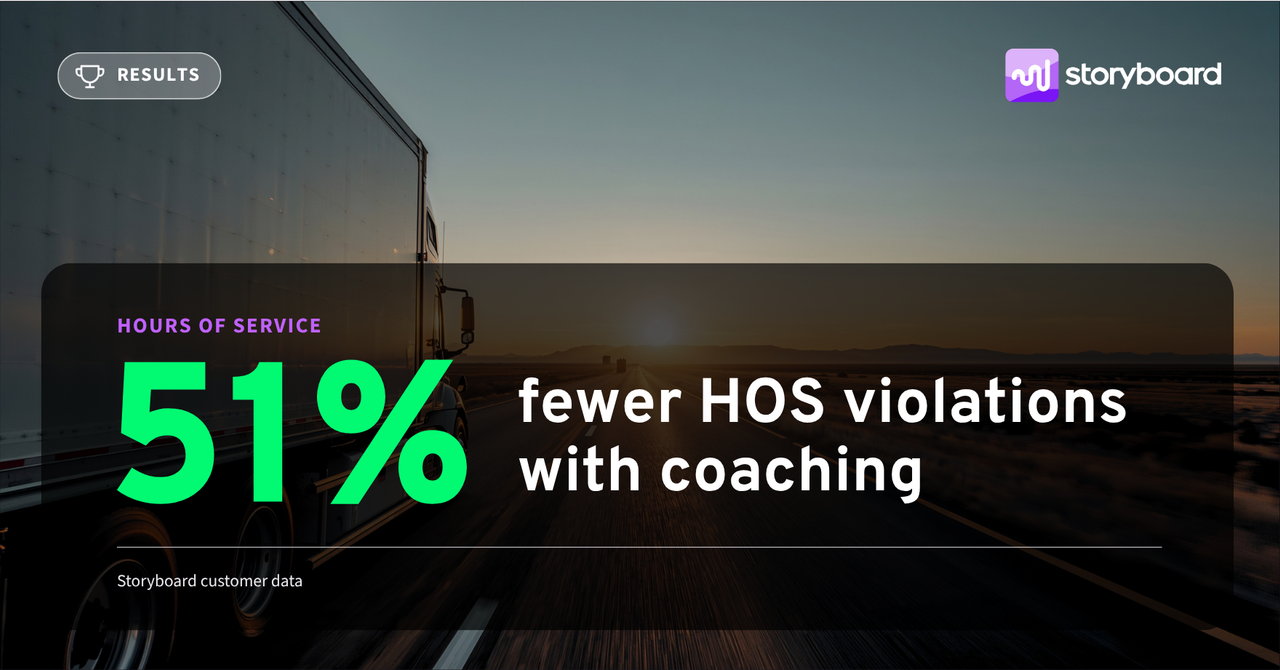
- HOS clock violations per 30 near-limit driving days: 51% fewer violations
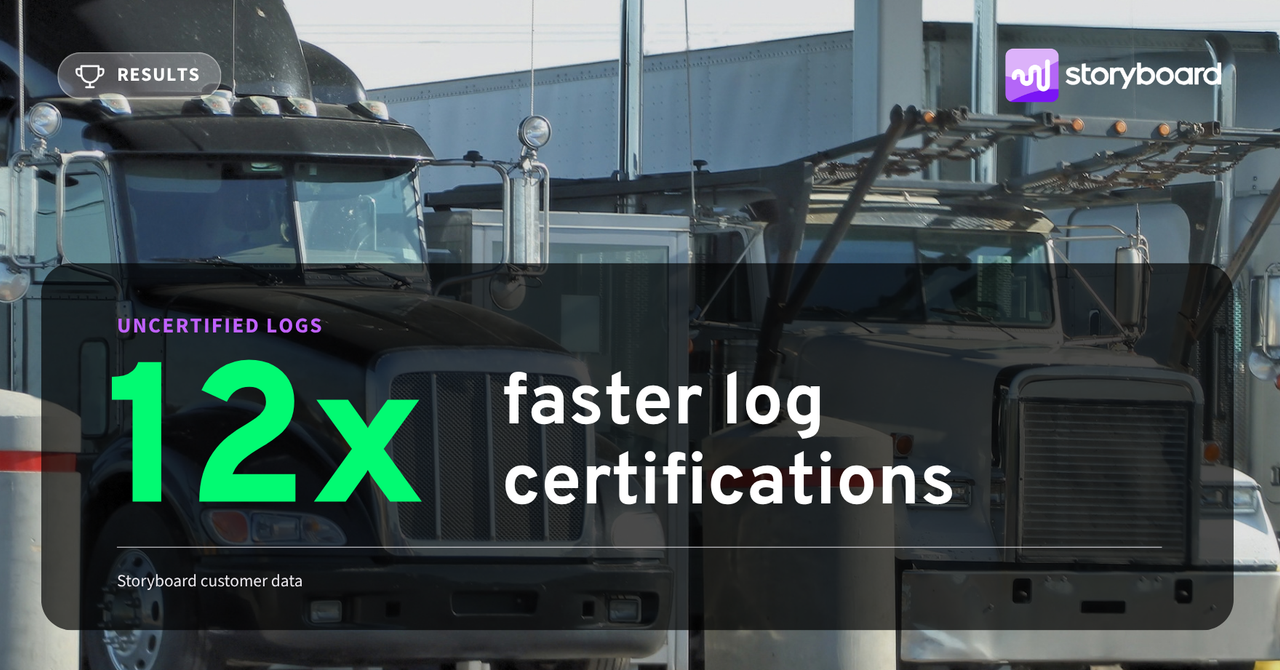
- Median time from log reminder to certification: 18 minutes; 12x faster
- Missing shipping IDs fixed the same day: 67%; 23% more often
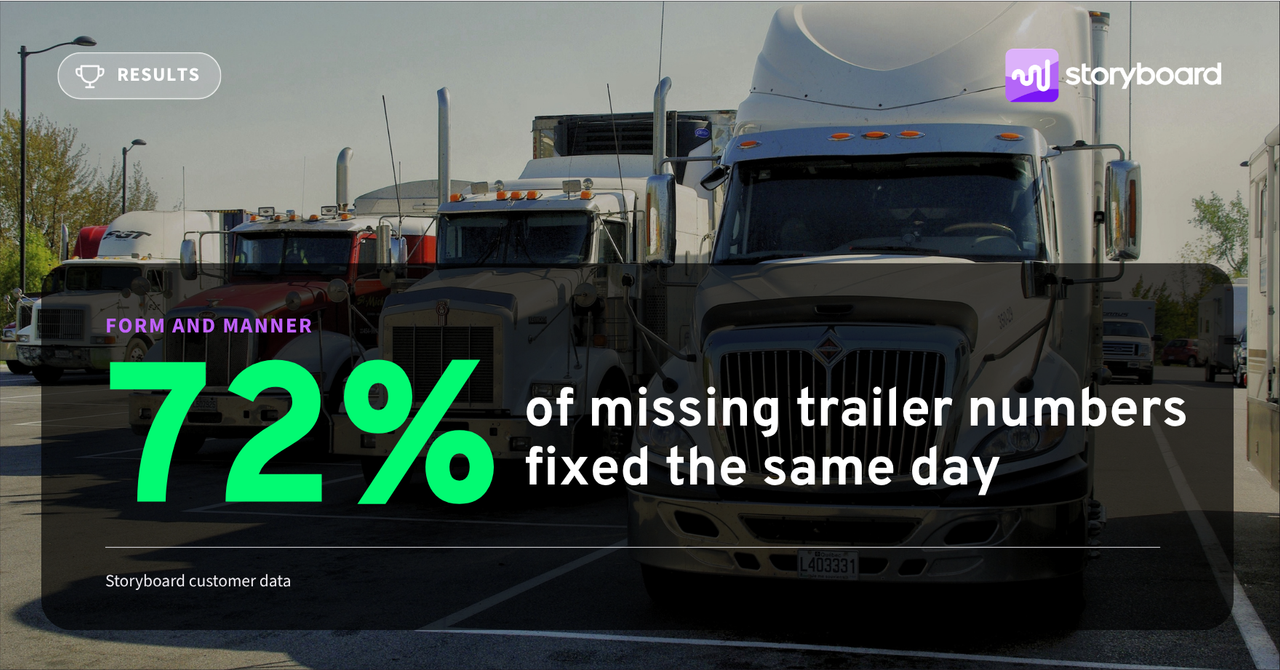
- Missing trailer numbers fixed the same day: 72%; 13% more often
The HOS comparison covers more than 21,000 at-risk driving days across five fleets. The log certification comparison covers four fleets, and the shipping and trailer comparisons cover more than 4,700 reminders at two fleets.
Fleet-wide, the trends moved in the same direction after reminders began reaching drivers.
Where the gains came from
Reduce HOS Violations: a warning while there's still time to park
Every Hours of Service (HOS) violation starts the same way: a driver runs short on a clock and has nowhere legal to stop. Storyboard speaks up at 60, 45, 30 and 15 minutes before a limit, so the driver can plan a stop instead of discovering the problem at minute five.
On days when drivers came within an hour of a limit, those who heard the warning in time had 51% fewer clock violations than those who didn't. The effect held fleet by fleet:
- America's Service Line (about 180 drivers): 51% fewer violations when the warning was heard
- Grand Island Express (about 160 drivers): 46% fewer
- Paul Transportation (about 300 drivers): 37% fewer
HOS clocks don't keep office hours. Watching every driver's clocks by hand would take a safety team staffed around the clock, nights and weekends included. Storyboard watches every clock all the time and speaks up whether or not anyone is at the dashboard.
Reduce Uncertified Logs: fixed before the first mile
An uncertified log is an easy violation to avoid and an easy one to miss. As we covered in How to reduce uncertified log violations, the fix takes a driver a minute, but only if someone reminds them before a roadside inspection does.
When the reminder is heard, drivers act almost immediately. Across four fleets, the median time from reminder to certification was 18 minutes for drivers who heard it, versus 3.6 hours for those who didn't. At Grand Island Express, 40% of drivers who heard the reminder certified within five minutes, compared with 13% who didn't hear it. Drivers who heard it were also nearly twice as likely to certify before they started driving (59% vs. 32%).
Fleet-wide, late certifications at Product Distribution Group fell 60%, from 4.5% of logs to 1.8%, after reminders began.
Reduce Form and Manner Violations: shipping IDs and trailer numbers
Missing shipping document numbers and trailer numbers are small errors that still count as form and manner violations. They rarely make headlines, but they add up: each one is roadside exposure, and each one is cleanup work for the safety department. Storyboard checks these fields when a driver goes on duty and reminds them if something is missing.
Drivers who heard the reminder completed a missing shipping ID 23% more often than those who didn't. At Grand Island Express, drivers who heard it fixed missing shipping IDs and trailer numbers about 30% more often. Grand Island Express's share of driving days with a missing shipping ID roughly halved, from 8.6% in April to 4.2% in August.
Why "heard" is the whole story
Every safety manager knows the feeling of watching a violation coming on the ELD and having no way to be in the cab when it matters. The next best thing is a voice in the passenger seat, speaking up while there's still time to act.
Across every metric we measured—the pattern is the same: the reminder only works when it reaches the driver. That's where the usual ways of reaching drivers fall short: a text they can't read behind the wheel, an ELD message that sits unplayed until they tap it, a call that goes unanswered.
Getting through takes two things: a channel that works while the driver is behind the wheel, and a driver who wants to listen. In a recent CCJ discussion of what drivers really think of in-cab tech, the theme was trust. Drivers tune out technology that feels like surveillance. They engage when it clearly helps them, and when feedback comes in real time rather than in a weekly review. Drivers who got proper onboarding rated coaching highly effective 74% of the time, compared with 19% for those who didn't.
Storyboard is built for that kind of coaching. A reminder at 30 minutes left on a drive clock isn't a write-up. It's a heads-up that keeps a clean record clean, and it comes hands-free, so drivers never have to pick up a phone. Fleets get the most from Storyboard when they introduce it as a tool for the driver.
Consistency matters too. When every driver gets the same reminder at the same moment, "I didn't know" stops being an excuse. Safety teams still own retraining and discipline, but they start from a clear record of what each driver was told and when. That moves their time away from monitoring and cleanup and toward coaching the drivers who need it most.
What this means for your fleet
For safety teams, the takeaway is simple. Real-time coaching that drivers actually hear prevents violations before they reach your CSA Scorecard, and it frees supervisors from chasing logs and paperwork after the fact. It gives a lean safety team round-the-clock coverage it could never staff by hand.
- Fewer HOS violations when drivers are warned while there's still time to stop
- Faster log certification, usually before the truck moves
- Cleaner form and manner on shipping IDs and trailer numbers
- No new hardware: Storyboard works with Samsara, Geotab, ISAAC and Platform Science
Want to see what these numbers could look like for your drivers? Talk to our team about the CSA Compliance Assistant.
Methodology: Data from five fleets using Storyboard, April 1 to August 31, 2026. "Heard" means the reminder played unmuted on the driver's tablet in time to act. Comparisons show association between hearing a reminder and the outcome, not controlled experiments.