Customer Interview

How Paul Logistics cut HOS violations by 60%
Paul Logistics used to catch hours-of-service problems the reactive way: a weekly report, then phone calls drivers stopped answering.
Kevin Andrew explains what changed when coaching reached drivers in the moment.
Listen to the Interview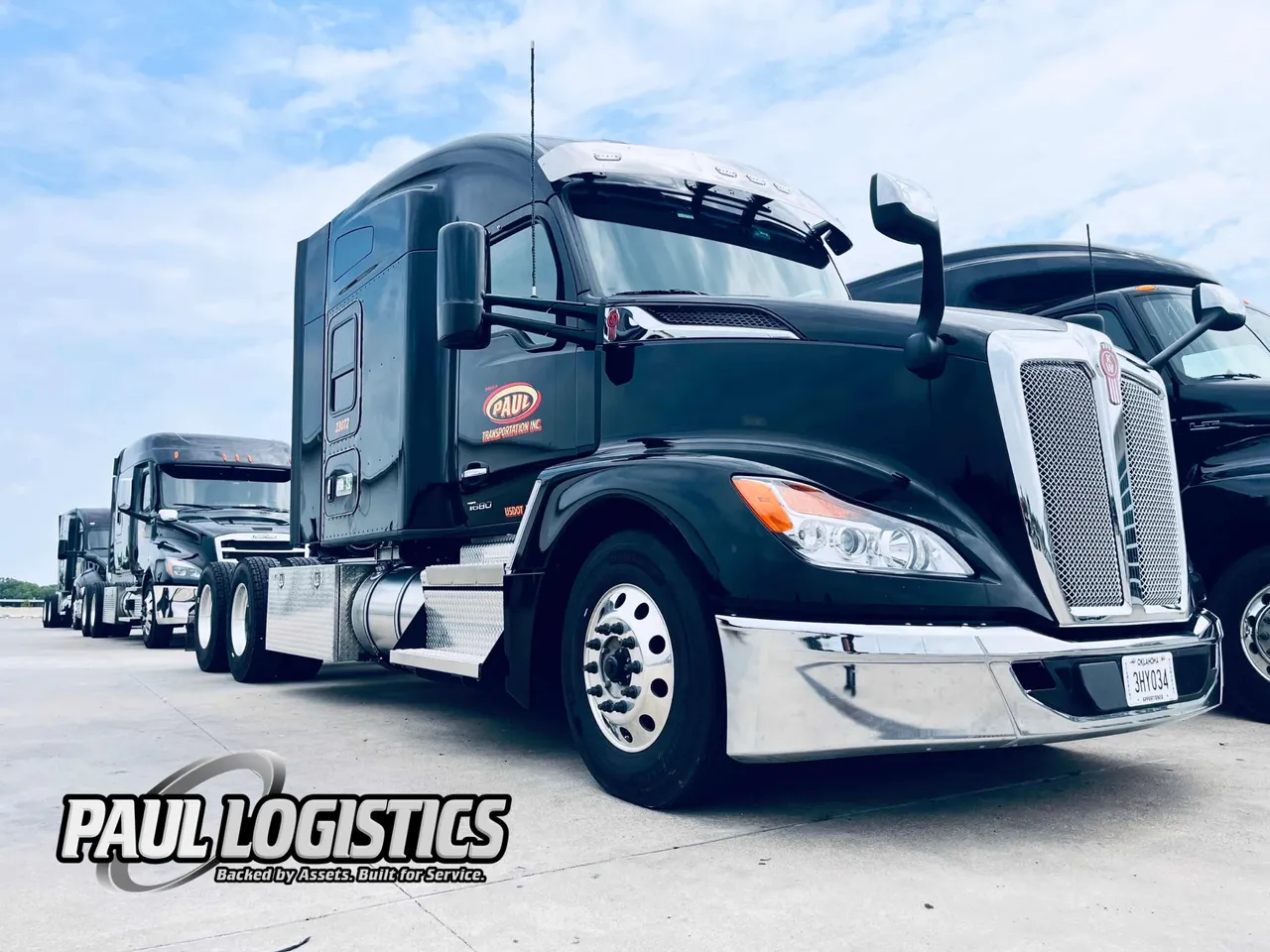
What changed
- fewer violations since proactive coaching began
- 60%+
What you'll hear
- Why reactive hours-of-service coaching — a weekly report, a list of drivers, and phone calls they stopped answering — cost so much time for so little change.
- What happens when reminders reach drivers in the cab, tailored to whether they are driving, on duty, or in the sleeper.
- How fuel-tank data matched to duty status closed a fuel-stop logging gap Kevin Andrew had fought for 29 years.
- What Kevin Andrew looks for before choosing an AI vendor.
Paul Logistics on proactive hours-of-service coaching
Highlights
- From reactive to proactive
- Hours-of-service compliance has always meant coaching drivers after the fact. Nine months into proactive coaching, Paul Logistics has seen a major reduction in violations — across the hours rules, log certification, form and manner, and fueling on duty.
- Why reactive coaching costs too much
- Running a weekly report, picking out drivers, and calling them took hours, and drivers learned which number not to answer. Reminders tailored to each driver’s duty status reach them while they can still act.
- Results, and no more excuses
- Violations are down at least 60%, and compliance work on a 350-truck fleet takes about three hours a day instead of a full-time role. Because drivers are coached as it happens, “I didn’t know” no longer holds up.
- Closing the fuel-stop logging gap
- Fueling has to be logged as on-duty time, and catching misses used to mean matching fuel-card reports to drivers by hand. Storyboard matched fuel-tank increases to duty status, and Kevin Andrew now gets a weekly report instead of a 29-year-old problem.
- Advice on choosing an AI vendor
- Start with customer service. Look for a partner that listens to the problem you bring and works through it with you.
Full transcript
Prefer to read, or cannot listen right now? The whole conversation is here.
Read the full transcript
@0:05 · JP Gooderham (Storyboard)
Hey there, folks. I am very excited to be joined today by Kevin Andrew over at Paul Logistics. And I’ll introduce him in a moment. But this is a fleet leader that we’ve worked really closely with this year, and I’m excited to share his perspective. Kevin, how are you doing today?
@0:21 · Kevin Andrew (Paul Logistics)
I’m doing fine, thank you.
@0:24 · JP Gooderham (Storyboard)
Really appreciate you being here. Just to tee this up for folks listening — and I actually don’t think I’ve ever talked to you about this — what was your path into trucking, and the path to where you are today?
@0:40 · Kevin Andrew (Paul Logistics)
I got into trucking back in 1995. Went to a trucking school, became a driver, and was in the top 10 revenue producers for the company I worked for. Then I ran night operations for a couple of years, and moved to — I did seven orientation sites at different places across the country. Once I got that done, they moved me into driver personnel, where I did all the driver qualification files, compliance, FMCSA stuff. And then after that, they moved me into safety. So over the course of nine years, I went from a driver to working in the safety department. That’s how I got into this. Since then — 2001 or 2003 — I went to work for another company. I got them out of trouble with DOT. Then I went to Paul Logistics, where I was for 15, 16 years. I’m actually retired.
@1:48 · Kevin Andrew (Paul Logistics)
I came out of retirement to help another company with their compliance and safety rules. They had a proposed unsatisfactory safety rating after our audit, and I was able to follow a corrective action plan that got them a satisfactory from an unsatisfactory. So once Troy at Paul Logistics heard about that, he said, “I think I’ve got some issues.” So now I’m back as a consultant, helping them get their stuff in order. It’s about 30 years of experience in the trucking industry, from every aspect that you can think of.
@2:29 · JP Gooderham (Storyboard)
Yeah, you’ve done it all, from driving a truck to managing people to managing the safety side, right?
@2:35 · Kevin Andrew (Paul Logistics)
Yep, the whole works.
@2:39 · JP Gooderham (Storyboard)
So, the company that you came out of retirement to step in and provide some support on some pretty critical initiatives — tell us a little bit about Paul Logistics for folks who might not know the fleet. The type of freight you haul, what a typical week looks like.
@2:57 · Kevin Andrew (Paul Logistics)
Paul Logistics is a diversified company. We have local drivers in Tulsa. We have a couple of steel and pipe yards that we transport pipe and steel out of — one in Houston, one in Tulsa. We’re an over-the-road flatbed carrier. We do have a small van presence, but overall, that’s kind of our business plan. We’re pretty diversified. We do intermodal work from the Port of Houston to these yards. So we’re involved in several different things.
@3:38 · JP Gooderham (Storyboard)
If we rewind the tape a little bit to the start of this year, when you and I met and got the opportunity to start speaking, you were starting to think through some key compliance initiatives. What were some of the major priorities that you had for your project work as you came into 2026?
@3:56 · Kevin Andrew (Paul Logistics)
Hours of Service. Compliance with FMCSA and Hours of Service has always been a kind of reactive presence that we’ve had to take, to coach drivers to change driver behavior. I said 40 years ago, if I could have something more proactive than the truck, it would be beneficial. And then I received a call from Storyboard, and that pretty much set everything in motion. Because with AI right now, we have shown that we can do the proactive coaching and have a major reduction in violations — hours of service violations, not only the hour rules, but the certification of logs, form and manner, and the fuel on-duty requirement. So we’ve come a long way in the last nine months.
@5:01 · JP Gooderham (Storyboard)
Something that you say — and quite directly, I steal it when I talk to other fleet leaders — is that proactive versus reactive thing. Let’s talk for a second about that. You’ve worked with multiple fleets helping to improve their compliance position. Everyone has an ELD, everyone has the data. Why isn’t reactive coaching the right move that maybe a lot of fleets are doing today? And why do you think it can be better to be proactive, coaching drivers before they get these violations?
@5:35 · Kevin Andrew (Paul Logistics)
Well, reactive just accumulates a lot of time to coach. You have to run a report, and you have to go through the report and pick out the drivers that you want to coach. My reactive plan in the past — we would do it weekly, trying to absorb all this information and react to it, to get drivers to change their behavior. It was just too time-consuming.
With a proactive AI approach, drivers are constantly getting reminders of things that they’re not doing. That only happens when they’re on duty. Storyboard has been able to actively look at their duty status and tailor the messages around their duty status, whether it’s on duty, sleeper, driving, or whatever. The reactive part of it just takes too much time. The results of that was probably 10%, where we’ve had a 90% improvement in that.
@6:52 · JP Gooderham (Storyboard)
Really appreciate you saying that. It’s another thing I heard from a safety director I worked with: every safety director I meet in the industry wants their people to get home safe, right? And they want to be able to use their time to coach and work with drivers on high-priority issues. In terms of that time savings — before, it was a lot of work to go back and see what went wrong. What were you seeing with the safety team, in terms of the workload they had to do just to find the issues?
@7:25 · Kevin Andrew (Paul Logistics)
Well, you know, of course, drivers never liked getting those phone calls. So they got to know where the phone number was coming from on their cell phone, and they just plain wouldn’t answer the phone to receive the coaching. Again, it was just time-consuming with limited results until you actually brought the guy in. Our process now is pretty much to eliminate bringing anybody in. And we’ve got 95% of the fleet pretty much handled.
@8:04 · JP Gooderham (Storyboard)
Just to key in for anyone listening who might not know about Storyboard: something Kevin said that I would highlight is that a big approach we’ve taken in our work together has been audible, verbal coaching that drivers hear from their ELD. It can tell them when they’re approaching an hours of service required break, or they have an uncertified log that’s older than it should be and they need to take action.
You mentioned before, and I really like this comment, that drivers could tune out when they were getting those calls from safety. How have the drivers reacted to the Storyboard alerts? Have there been any challenges? Do drivers see that it’s helping them? Have you had to give them some coaching? What does that look like for your fleet?
@8:49 · Kevin Andrew (Paul Logistics)
Yeah, we’ve done — I don’t know, probably 20% of the fleet — that we’ve had to really do coaching. The guys who really care and want to do a good job have responded well to it. We have dispatchers who love the system because they’re able to text to voice, and then the driver is able to voice the text.
You always have those 25 drivers that you have to bring in and coach, and they just want to be defiant. But other than that, you can pretty much stream out — or bring to the top — the guys that are going to be the issue in a very short period of time. And once you get those, you deal with those. But the guys who want to do a good job, which is about 75% of the fleet, we’ve not had to do much of anything other than just monitor, to make sure that they’re online, that they’re available, that they’re using the system.
@10:02 · JP Gooderham (Storyboard)
If I can sing your praises for a second, Kevin — and this is something I now coach a lot of our fleets on — something I think you’ve done extremely effectively is the accountability piece of this, and measuring the results. Kevin asks very detailed questions on the data, and it’s actually improved our reporting in a lot of different ways. To your point, you have drivers who are already doing a great job, some who want to do a great job, and some who probably need some more work.
One other question. When I’m talking to new fleets, maybe a safety leader, they might say, “Well, look, on my ELD, let’s take hours of service — the driver has their clocks, and if they’re looking at them, they should know when they’re taking their break time.” Why does that alone, in your opinion, not work to prevent hours of service violations as effectively as it should? Why do they need that kind of verbal reminder as well?
@11:05 · Kevin Andrew (Paul Logistics)
Well, that’s a good question. Getting the messages through Samsara, I guess I don’t know that it doesn’t help in some respect, but it just doesn’t seem to be nearly as effective as what we’ve accomplished with Storyboard. The AI approach — the Storyboard app that underlies all the other apps on their tablet — just seems to be more effective, and drivers respond to it. I think a lot of it is just because they’re getting that reminder right away, in some sort of different format than Samsara. That’s the ELD provider we use. Storyboard’s been able to take the data out of Samsara and make it so that we can use it effectively and proactively through AI.
@12:13 · JP Gooderham (Storyboard)
So Kevin, here’s the million-dollar question. I think a lot of fleet leaders today are thinking about automation and AI and where they’re going to get value, right? No one wants to pay for something that isn’t going to make an impact in their fleet. Everybody has a lot of technology already on their balance sheet. So the big question — and you touched on this earlier — is: does this get results? Is there anything you can share, from a results standpoint, on how the coaching has been working within your team?
@12:43 · Kevin Andrew (Paul Logistics)
Since we started this, we’ve reduced violations by at least 60% over the course of the last — well, some of the violations in the first month, back in May, June, July, are there. But since then, we’ve reduced them at least 60%, maybe even 70%. Guys are responding to the reminders that they get from Storyboard, so it’s a big improvement.
And on a fleet of 350 trucks, we’re spending about three hours a day, where before I had a full-time person spending all week trying to decipher this. It’s been dramatic, positive results, and it’s very, very practical. It’s a wave of the future.
The one thing it really does is take away driver excuses. In my past experience with the reactive way, you bring them in, and it’s “Well, I didn’t know that,” or “I didn’t know that.” Well, now there aren’t any. It has completely done away with the excuses, because they’re getting coaching — positive coaching — as it happens, which is very beneficial to us.
@14:18 · JP Gooderham (Storyboard)
Turning the page — and thank you for that, Kevin. That’s really what we do it for, right? We want you to feel like you have a safety supervisor or a dispatcher in the passenger seat. It’s not that the data didn’t exist, right? Everybody has the data, but being able to act on it in real time versus after the fact.
@14:38 · JP Gooderham (Storyboard)
That’s tremendous. I’m really excited to hear that. But something we really pride ourselves on is that there’s a lot that our customers know from their expertise that they bring to us. And sometimes it hits us and we’re like, “Wow, we hadn’t even really thought about that problem before.” You found an interesting opportunity with fuel stops. I was curious, can you share a little bit on what you saw as an opportunity and how we worked together to make some improvements there?
@15:08 · Kevin Andrew (Paul Logistics)
Well, to go back a few years — at my first job, we had a fatality accident that involved four college kids who were killed, and I had DOT in. We got nailed because one of the on-duty requirements of DOT is that when a driver is responsible to the company, he has to log it on duty. Every driver is responsible to fuel his truck, so they need to log it on duty. Needless to say, then I had to work. They get our conditional because we lost our satisfactory safety rating due to drivers not logging fuel on duty.
I’ve worked with a couple of other ELD providers in the last 30 years, and none of them say they have an issue with that. But the problem is, it’s on-duty time, and it’s very reactive, because normally in the past, you had to get the report from your fuel card provider and match it to the drivers. ELD companies didn’t want to do it.
So I brought up with Storyboard that we need to find a solution to that problem, and they did a tremendous job. They figured out that the fuel tank levels — when they increase, the data was available — but nobody, obviously, wanted to use it, or — I don’t know what the reason was — they just didn’t want to deal with it. Storyboard took that data, when fuel increases in the tank, and matched it to the drivers’ on-duty time. Now that has tremendously helped. I get a report every week of who’s off duty or in sleeper when they’re trying to fuel. I’ve got three guys that just plain don’t do it. Other than that, the rest of the fleet has responded. We can tell when the fuel tank increased, we can tell they’ve got 30 minutes to log on duty, and if they don’t do it, they provide the information of how many minutes it takes them to change from off-duty or sleeper to on duty.
I can’t say how happy I am that they found a solution to that issue, because it’s been an issue for the last 29 years. It’s not an issue this year. So we’ve got it handled, and it’s working very well.
@18:11 · JP Gooderham (Storyboard)
Yeah, if I can underline something — this is my favorite type of problem. When someone comes to me and says, “Look, we’ve got to look at two different spreadsheets or two different reports and connect all these dots,” that to me is one of the most obvious opportunities for where software and technology is going. This is not, in my opinion — whether it’s a safety supervisor or a safety person — where I think we can get the most benefit from their time, in terms of what we can do for a fleet.
So when you brought that, my eyes really opened. It’s good to hear that it’s been positive. We had a lot of fun working on that project, and it’s something I think more of our fleets are starting to consider. For anyone who hasn’t looked at the way fuel stops are being logged, it’s a good thing to be proactive on.
Kevin, I want to turn away from Storyboard for a second, because — you mentioned you started driving, was that ’95?
@19:10 · Kevin Andrew (Paul Logistics)
1995.
@19:15 · JP Gooderham (Storyboard)
If we go back to 1995, there’s no Google yet, right? And I’m guessing you were running with paper logs. Fair statement?
@19:22 · Kevin Andrew (Paul Logistics)
Yeah, yeah, several of them.
@19:29 · JP Gooderham (Storyboard)
So you have seen, from the time you started driving to managing people in fleets to managing safety programs, some major, major technology transitions. Somebody told me this — I’ll say their quote — they said, “A year ago, I couldn’t spell AI. Now I’m figuring out what to do.” What tips, outside of Storyboard, would you give to other leaders in the industry who are just getting started — where they can be using AI, how they can find the right vendors? What do you look for? Because this is something you’ve moved really fast on.
@20:07 · Kevin Andrew (Paul Logistics)
Well, the first thing I look for is customer service. You’ve got to have a company — and I’ve told our ELD provider that if they can’t find a solution, I’m going to go out and hire somebody who can find solutions to these issues. We’ve done that. You want to find a company that will work with you and provide customer service to your needs. That’s what I would look for. Obviously, you know who our first choice was. I looked at two or three different ones, but there was just something about how our conversations went, how they were reactive to what I was talking about. Those are the things I would look for. I could use our ELD provider. Every time I brought up a problem or an issue, they would go, “Well, nobody else is doing that.” Well, I found out a lot of other people were wanting to do that, but they wouldn’t listen. So you’ve got to find a company that you can connect with that will work with you. And obviously, we found that company.
@21:41 · JP Gooderham (Storyboard)
The feeling’s mutual, Kevin. To underline something you said that I really believe in: this stuff matters. If you’re listening and you’re thinking about where automation can be helpful — in dispatching, in safety, in compliance — these are affecting real people who are on the road every day.
On our side, it’s a huge benefit that you came in with an idea — “Here’s something we’re trying to crack” — and also just asked where we can be better for your drivers. I think that just makes the product so much stronger, not just for working with Paul, but we take those lessons and we get to use them with every driver we work with who’s in our network, in a lot of cases. So, Kevin, really appreciate you saying that.
I’ll bring us to a close there, but I just wanted to say thank you for your partnership over the last year, and for coming on here and sharing your perspective and your experience from a veteran career in trucking. Thank you very much.
@22:43 · Kevin Andrew (Paul Logistics)
You’re welcome. Anytime. Thank you.
“It has completely done away with the excuses, because they’re getting coaching — positive coaching — as it happens.”
About the guest
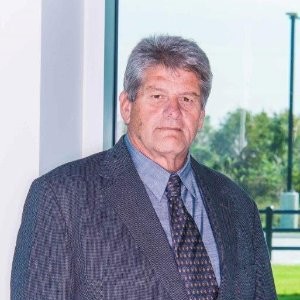
Kevin Andrew
Compliance & Safety Consultant, Paul Logistics
Kevin Andrew started driving in 1995 and has spent 30 years in trucking since: driver, night operations, driver qualification and compliance, then safety. After 15 years at Paul Logistics, he retired, came back to lead another carrier from a proposed unsatisfactory safety rating to satisfactory, and returned to Paul Logistics as a consultant.
About the fleet
Paul Logistics
Flatbed carrier · Tulsa, Oklahoma
Paul Logistics is a diversified carrier: over-the-road flatbed with a smaller van operation, local drivers in Tulsa, steel and pipe yards in Tulsa and Houston, and intermodal work from the Port of Houston to those yards.