Customer Interview

How Grand Island Express cut engine idling by 9.4% in two weeks
Grand Island Express runs 170 refrigerated trucks and could already see how much each one idled — a month at a time, long after the fuel was gone.
This interview covers what changed when that signal reached the driver while it still mattered, and what the first two weeks looked like.
Listen to the Interview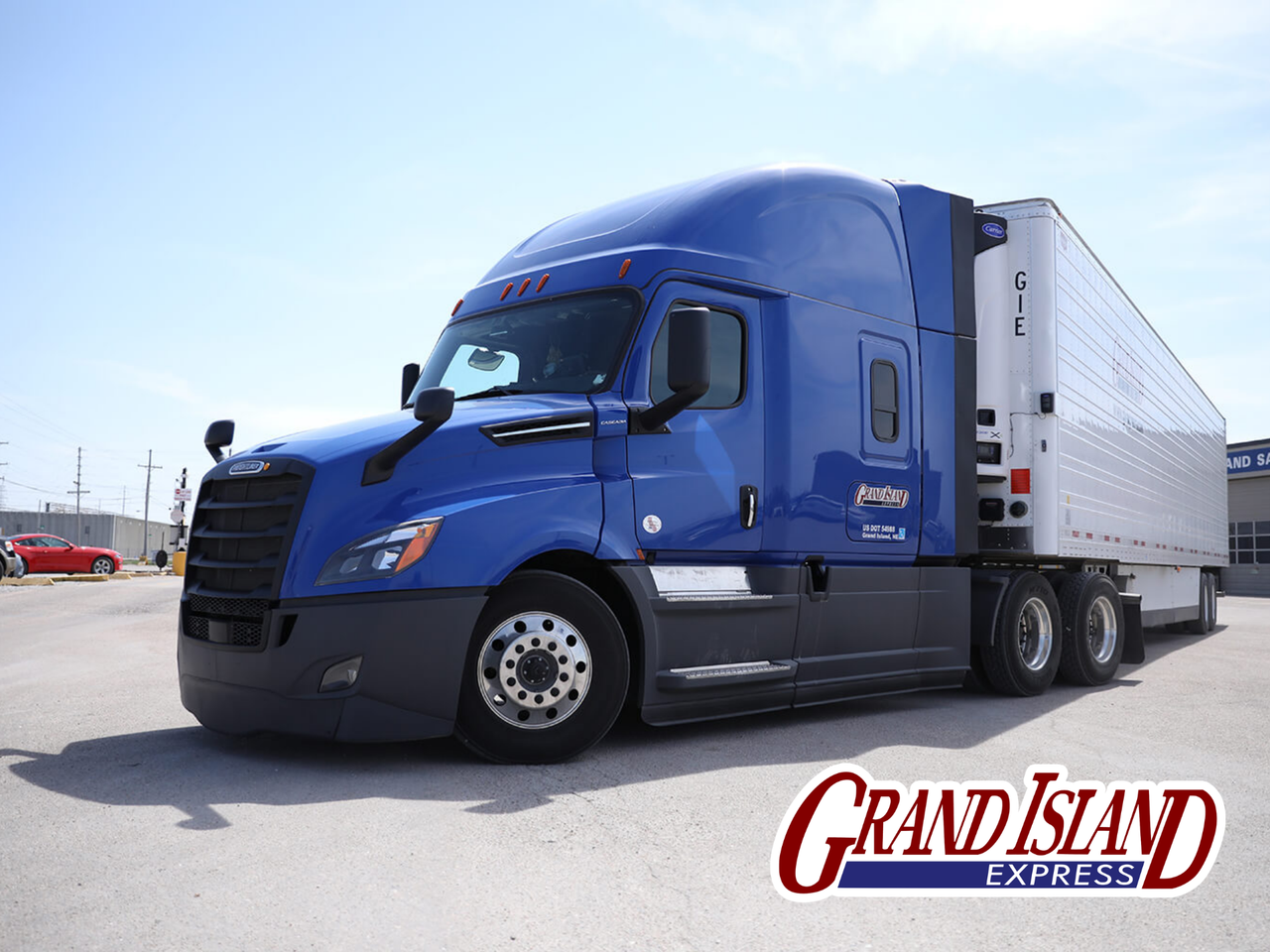
What changed
- idle reduction in two weeks
- 9.4%
- of coaching interactions led to immediate driver action
- 67%
What you'll hear
- Why idle data the fleet already had was a lagging metric, and what that cost in coaching.
- What actually changed when the alert reached the driver while the engine was still running.
- Why an alert that annoys a driver can be the start of the conversation rather than the end of it.
- What Deen Albert tells other carriers to look for before they buy anything.
Grand Island Express on idle coaching
Highlights
- Idle data the fleet already had, a month too late
- The trucks reported idling all along. Without help it was a lagging metric: a month of data, then a driver called in and told they idled 30% of the time. Useful for a scorecard, useless for changing what happens in the cab.
- The alert starts a conversation, not a scorecard
- Engagement comes first — often as a driver asking why they are getting the alert at all. The staff turn consultative from there, and sometimes the answer is a failing APU rather than a habit.
- When it annoys a driver, that is the catalyst
- Some drivers do get irritated, and Deen Albert counts that as a win: a driver who wants the alert to stop is a driver who wants the situation to change. The condition is that every alert is justified and actionable rather than white noise.
- Advice to a fleet considering this
- Choose the partner carefully, because no product fits every carrier unaltered — and go in expecting to teach it. Trucking is still a people business, and the tools worth having are the ones that make people better at it.
Full transcript
Prefer to read, or cannot listen right now? The whole conversation is here.
Read the full transcript
@1:50 · Maggie Gryko (Storyboard)
Deen, thank you so much for joining. Maggie Gryko, I work for Storyboard, and what we really support fleets with is a hands-free voice system, as well as AI workers to hopefully take some of the work off of your team's plates. But before we kind of dive into a little bit of the work we've been doing with Deen and Grand Island, Deen, I was hoping you could introduce yourself, and provide a little bit of context for the folks listening about Grand Island, as well as your role there.
@2:37 · Deen Albert (Grand Island)
Sure, yeah. So my name is Deen Albert. I run fleet operations for Grand Island Express, which includes all of our operational duties, recruiting, and sales.
Grand Island Express is about a 170-truck refrigerated fleet based in Nebraska. And we primarily work with protein shippers in Nebraska, but we are spreading our focus across other temperature-controlled realms as well. So happy to be here, and thanks for having us.
@3:13 · Maggie Gryko (Storyboard)
Of course, and thank you for that introduction. Really excited to have you here. So to kind of start at the beginning, Deen, as a vendor in this space and having attended conferences and so forth over the past year, and even longer than that, I think there's been a pretty big evolution in how fleets are thinking about AI workers, how they can support fleet operations, and so forth.
I know that you have been kind of thinking about this for some time and have been actually using AI in some parts of your operations. I'd love for you to share a little bit about how have you thought about the space? What do you see some of the potential benefits, risks? How have you thought about integrating it into your guys' workflows?
@3:56 · Deen Albert (Grand Island)
Yeah. So, you know, we really started off in the space. Our first dive into AI was an advanced decision model, which helped us gain some efficiency in dispatch. And we were really successful in that. And so we started expanding our reach a little bit with some more agentic work.
But the way we look at AI and any products related is, you know, we really want to answer the question, does it make our people better? Not does it replace people? But does it actually make the people we have better, more efficient? Can it do things that they can't do? And is that something we want to pursue?
So we're pretty selective in what we do with it. But, you know, I think that pickiness about what products we're looking at allows us to get more gains than anything with it, and it reinforces the idea that we still need people in these positions to do the higher-level thinking.
@5:16 · Maggie Gryko (Storyboard)
Yeah, I think that's a really important component of it being additive to your guys' processes. So, as you thought about engine idling, right, I know we were having a conversation before some of the stuff started in the Middle East, but diesel prices were already kind of going up, and that is such a significant cost.
I guess I'm curious, how did you guys try and tackle engine idling in the past, whether it's the monitoring or the coaching of drivers? And if you don't mind sharing, I'd love to know, like, what worked well about that, and what were some of the challenges that you saw?
@5:55 · Deen Albert (Grand Island)
Sure. So, you know, one good thing about our trucks and many trucks today is that we can get the engine idling data. The bad part is, without help, it's more of a lag metric for us. And so, you know, we go through, let's say, a month's worth of data, and then, you know, we work that metric from there.
So, last month, so-and-so driver idled 30% of the time. So, we bring them in and coach them. But we're not really addressing root causes through that. We're just saying, we'd like you to idle less, and here are our suggestions on how to do it.
And so, that was the challenge, was we're losing the real-time coachability as to what's really happening in the cab of the truck that can be done differently. And so, that's really, you know, why we sought some additional assistance with it.
@7:00 · Maggie Gryko (Storyboard)
Yeah, that's really helpful. And just to give people context, I'm just going to share a little bit about some of the workflows we deployed with your guys' help and guidance for your team.
And I think the first one was that real-time coaching, which you just touched on, right? So really, as a driver's idling, if they've hit some amount of time — I know we agreed to kind of 15 minutes for your drivers — in certain conditions, we go ahead and kind of share with them in real time a little notice, asking them to turn off their engine.
The second one that we've deployed with you guys recently is this high idling alert. So looking back over the last 24 hours, again, if a driver idles over a certain amount of time in those 24 hours, again, alerting them to how much they actually idled over that period and some interesting things from that.
The last one, which I know we haven't deployed yet, but we're excited to get this out very soon for you guys, is this weekly scorecard, aligning with people's pay period and just helping them understand where did they fall over the last week compared to your goals or other drivers and so forth.
So with those kind of alerts or AI workers sending those messages, I guess I'm curious to hear how would you contrast the current situation with that being automated to the past? And what's the value you're seeing, and how are you seeing the role of your staff, which is kind of what you mentioned, right? They can do that higher level thinking. How are you seeing that evolve and change?
@8:42 · Deen Albert (Grand Island)
Well, I think, you know, the first thing is immediately you get driver engagement. And sometimes that's in the form of, man, I'm getting this alert, I don't understand why I'm getting it. Okay, well, let's talk through that, right?
And so then the staff becomes more consultative, you know, starts asking questions and, you know, what were you doing at such and such time and did you turn the truck off? And if we go down this path and we still determine, okay, well, maybe their APU batteries are starting to go bad. And so then we bring them in and say, okay, we've got a truck issue we need to address.
But it starts with engagement, and the way to get engagement is to interact with that driver in real time. And now our staff isn't 24/7 and doing that, but the AI piece is. Then the driver asks for some follow-up and we're able to troubleshoot the situation and get a behavior change ultimately.
@9:48 · Maggie Gryko (Storyboard)
That's awesome. That's really great to hear that you're seeing that driver engagement on some of those alerts and so forth.
I guess from drivers, right, I know that there are other products that have actually engaged with drivers and coached them in the moment, right? The thing that always comes to my mind is cameras. I know that the cameras can do that kind of coaching.
I guess I'm curious to hear, and I get asked this a lot by fleets, is like, well, how do you know that drivers aren't tuning what you guys are sharing out, or that they're not going to get annoyed or so forth? Could you share a little bit about what has been the driver reaction? Like, what are you hearing from them as this AI worker is coaching them?
@10:38 · Deen Albert (Grand Island)
Yeah, and to be honest, there are some situations where the driver gets a little bit annoyed, right? But that's also the catalyst to the conversation. Hey, how do I stop this alert? Because it is, you know, it is eating at me. And we're really happy about that because, you know, a driver that has that fire in them cares about changing the situation.
And so, you know, sometimes it does annoy. And what we're wanting to make sure is that the alerts are justified and actionable. If they're alerts and white noise just annoying drivers, that doesn't do them any good. It doesn't do us any good. And you guys, and we, have done a pretty good job refining that.
But I personally get calls from drivers saying, hey, I'm getting this alert all the time. Okay, well, let's check it out. Let's find out why that's happening. And we can tell you what to do to fix it. Or it might be a situation where we have to collaborate with Storyboard to get that refined.
And I guess that's probably one thing I would point out is AI isn't set it and forget it and let a computer run. It is interactive. And we do have to teach it what to do to make it appropriate.
@11:55 · Maggie Gryko (Storyboard)
Yeah, I think that's a good point. And I think critical to that, right, is finding a partner who's going to do that with you, because you're exactly right.
@12:03 · Deen Albert (Grand Island)
You can't set it and forget it.
@12:04 · Maggie Gryko (Storyboard)
And that's the biggest, I think, learning and everything that we've built with you guys is how important it is, that constant refining and listening to the feedback and so forth.
@12:12 · Deen Albert (Grand Island)
So great call out.
@12:15 · Maggie Gryko (Storyboard)
I guess my last question for you, if you were talking to a fleet that's thinking about getting a handle on their engine idling, or just really kind of anything that they want to coach drivers on and they want to do it in real time, what would you share with them? What advice would you give them as they're thinking about venturing into the space?
@12:37 · Deen Albert (Grand Island)
Well, first, I would say choose your partner carefully in who you work with. Just as we just said, you want someone who's going to collaborate and make the product what you need. Every trucking company is a little bit different. And so there's not a one-size-fits-all product. So in that case, we look for the product that can adapt to each trucking company's needs.
And the second thing I would say is go into it with a reasonable expectation of what it will do, knowing that people are still behind this, and we don't want to diminish the value of people in a trucking company. It's still a people business. And so, you know, having tools that enhance that aspect is really the win, in my opinion.
@13:38 · Maggie Gryko (Storyboard)
Awesome. Well, thank you so much, Deen, for the time. That's really all I had for you, and I'm excited to share this with others and hear other folks' feedbacks and perspective on how they're tackling engine idling. Because I know right now with diesel prices going up, I know it's a focus for a lot of people. So thank you again for sharing yours.
@14:01 · Deen Albert (Grand Island)
Yeah, my pleasure. Thank you, Maggie.
“It starts with engagement, and the way to get engagement is to interact with that driver in real time.”
About the guest

Deen Albert
VP of Operations, Grand Island Express
Deen Albert runs fleet operations at Grand Island Express, working across operations, sales and recruiting. He is direct about what he would change in trucking: drivers should know that the right carrier can be a career rather than a stop along the way. What keeps him at this one is the access — drivers reach management without an intermediary — and an organization small enough to move the week a customer’s needs do.
About the fleet
Grand Island Express
Refrigerated carrier · Grand Island, Nebraska
Hauling refrigerated freight since 1967, Grand Island Express runs premium irregular-route, temperature-controlled transportation for shippers that cannot absorb a late delivery. Its trucks work 38 states across the eastern two-thirds of the country — the Rockies to New England to central Florida — and covered close to 18 million miles in 2025.